Your reading
A journal that lives inside the book.
Not a notebook you keep beside your reading. The notes are in the book, at the chapter you were on, and they open there every time you come back.
Every book you add gets its own private journal. Notes are tied to the chapter when the book knows its chapters, and to the page when it doesn’t, so they keep their place whether you’re holding a paperback, a Kindle, or a library copy with different pagination. Nothing in it is visible to anyone until you decide otherwise.
One book, one journal, any edition.
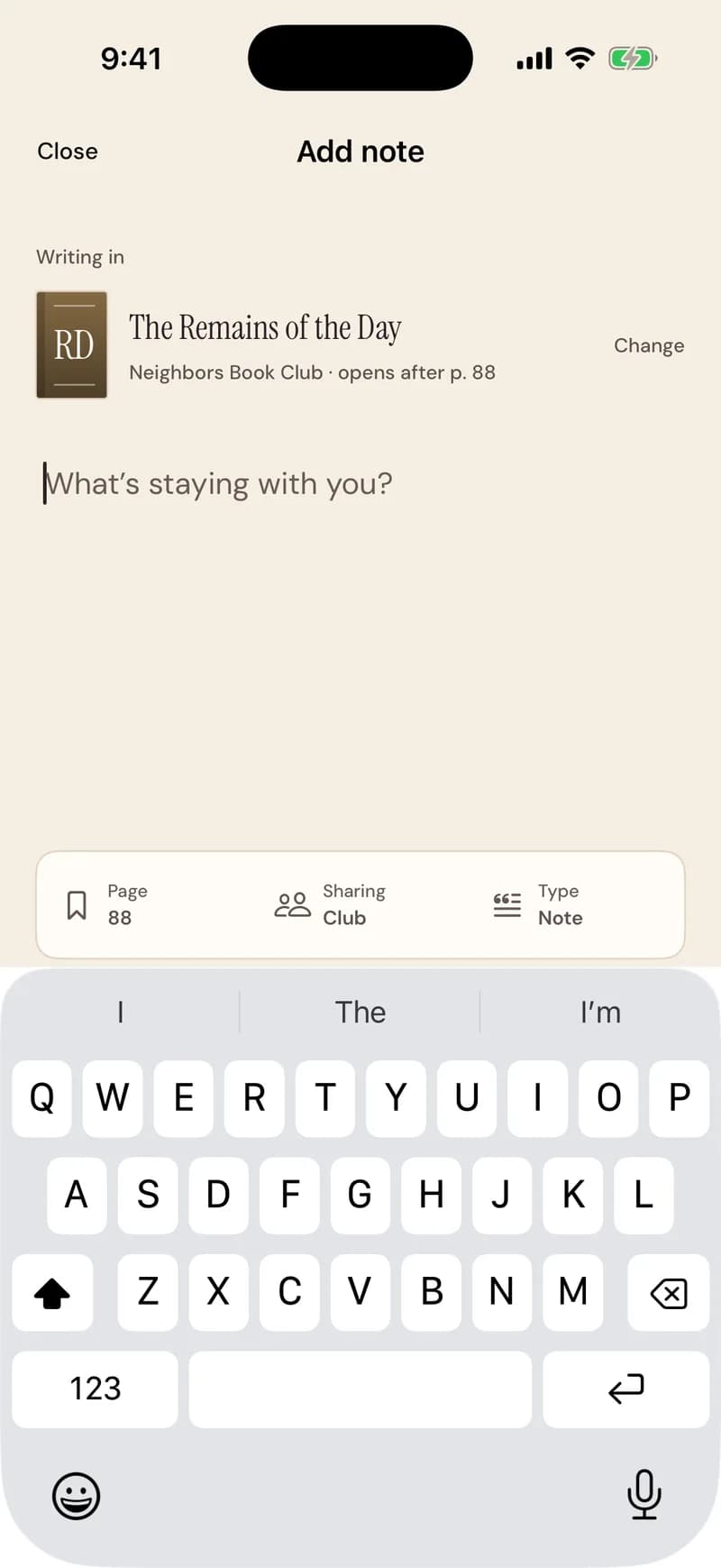
Add note
Say it, type it, or photograph it.
Write a note opens the page you’re on. Speak a note records while you hold, and writes it down for you — the recording stays attached to what you saved. Or point the camera at the passage and the words lift off the page. On the iPhone the photograph is read on the phone and never leaves it; on the web it is sent to Anthropic to be read.
Before your first voice note the app tells you plainly what happens: OpenAI turns the recording into text, and Anthropic uses that text to file the note at the right place. Nothing records until you allow it.
A note saves with no signal — on a plane, in a cabin, under the covers — and files itself when you’re back.On iPhone
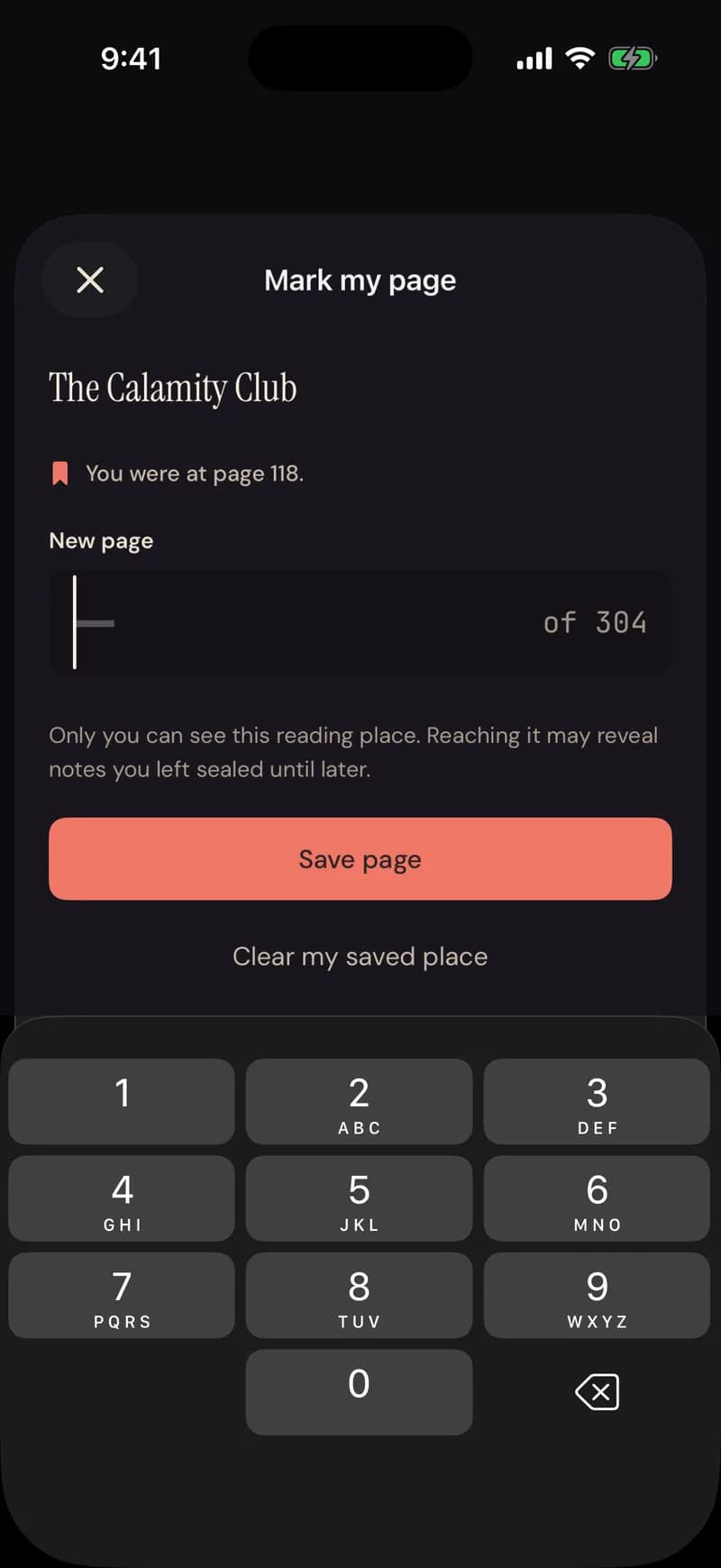
Mark my page
Page or chapter, whichever the book uses.
A book that knows its chapters files everything by chapter; one that doesn’t, by page. You never choose. Mark your place on the phone and it’s there on the web; change it on another device and the app asks before it replaces the newer mark.
Who can see this?
Only me, until you say.
Every note asks one question before it’s saved, and answers it in plain words. Sharing is a deliberate move out of the journal, never a side effect of writing.
Book life
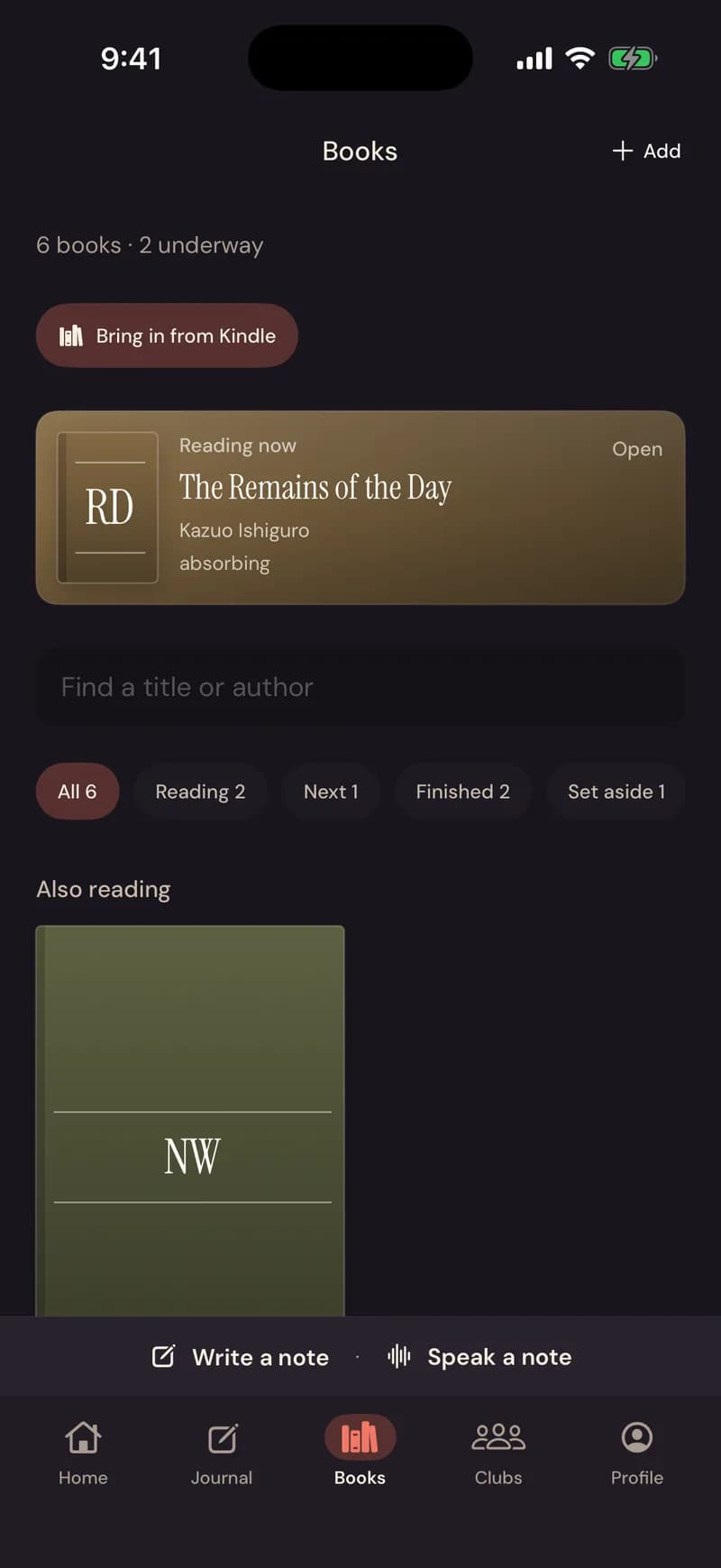
Reading, finished, set aside, or waiting.
On iPhone
Each book carries its own state — Reading, Finished, Set aside, Want to read — with a half-star rating, a review you choose the audience for, and private lists only you can see (“Books to recommend someday”). Finish a book on the phone and it’s written down before you’ve left the tap.
Saved words
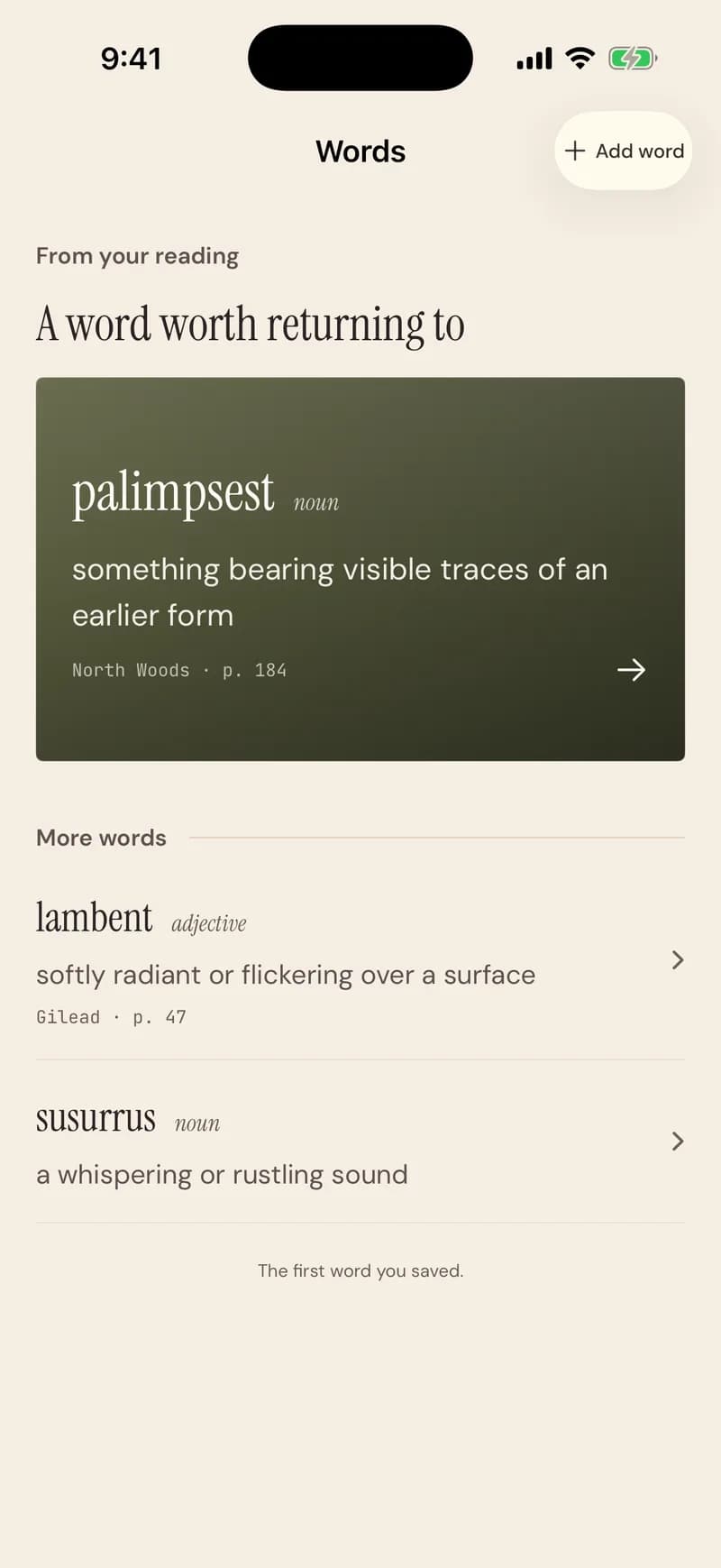
Keep the word beside the place you found it.
On iPhone
Save a word you met on the page. The meaning comes from a dictionary in a moment, or — for the archaic and the literary — from Rodney, in one sentence, matched to the way the book used it. If neither knows, you write it in your own words.
- You think out loud
- A keeper of lines
- You read to argue
- A nightly reader
- You read in company
- A finisher
- A reader, plainly
Your reading recap
Not a wrapped. A record.
On iPhone
Whenever you like, your reading so far turns into a few paper plates: your numbers, how you read, the book you filled, your saved words, when you read most, the first thing you wrote, and what kind of reader you are.
It refuses to count some things on purpose: minutes spent, and pace against a goal. Nothing here is a score.
Durable