Reflections
Give someone your whole reading of a book.
Everything you said inside a book, in the order you said it, gathered into one thing and handed to one person.
Making one.
Choose one of your books. Say how many chapters it has. Write a note for the person who’ll open it — on iPhone, record it, and your voice is the first thing they hear. Decide whether your notes go with it. Then send it to a friend by name, or as a link anyone can open.
Opening one.
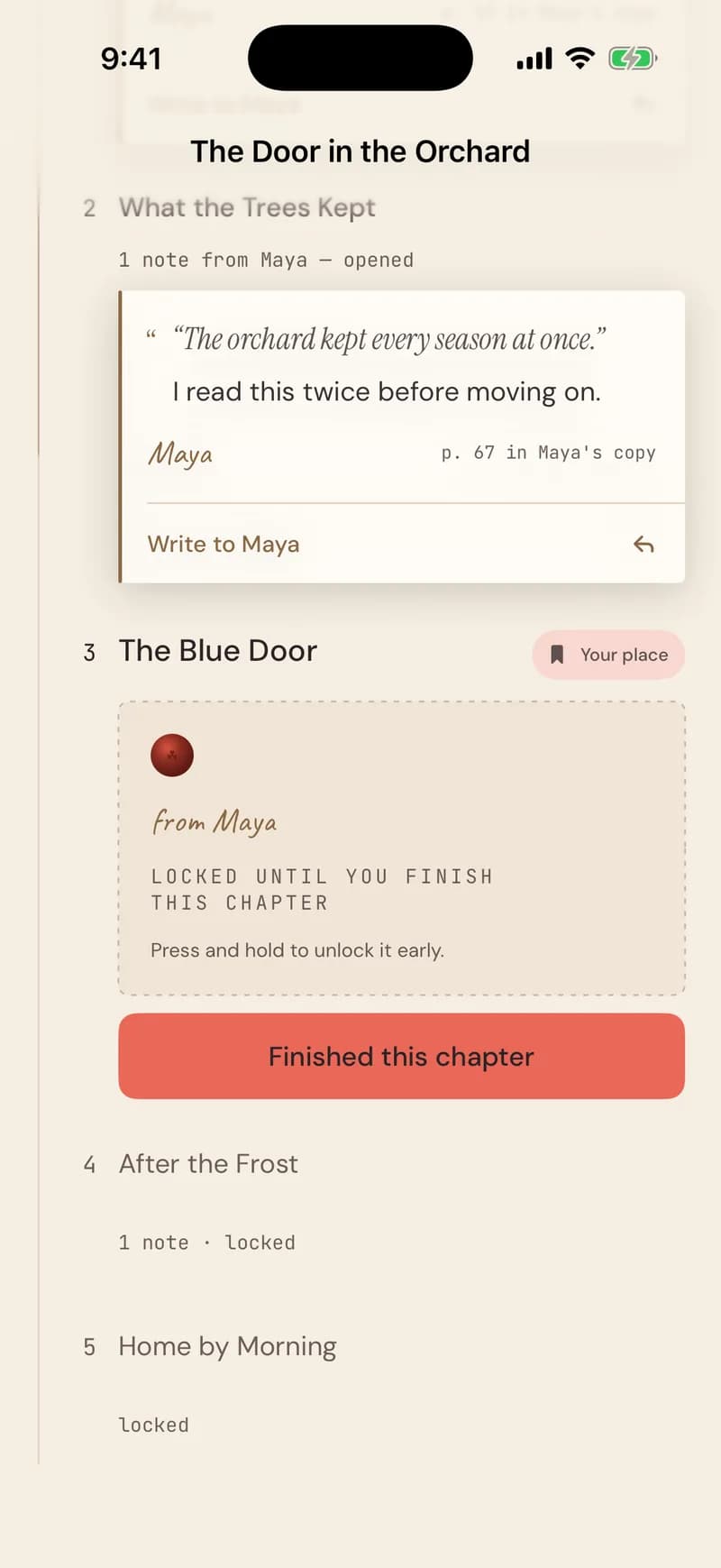
They open it against their own copy — paper, e-reader, any edition. The first question is Where are you in your own copy? Notes for the chapters they’ve finished are open; everything ahead stays locked. When they mark the last chapter: That is all of it.
Writing back.
At the end there’s a place to answer. Only the two of you can read it, and it stays with the reflection. If you ever stop sharing, every link closes at once — and what you two wrote comes back if you send it again.
Friends
No followers. No strangers. A few real friends.
On iPhone
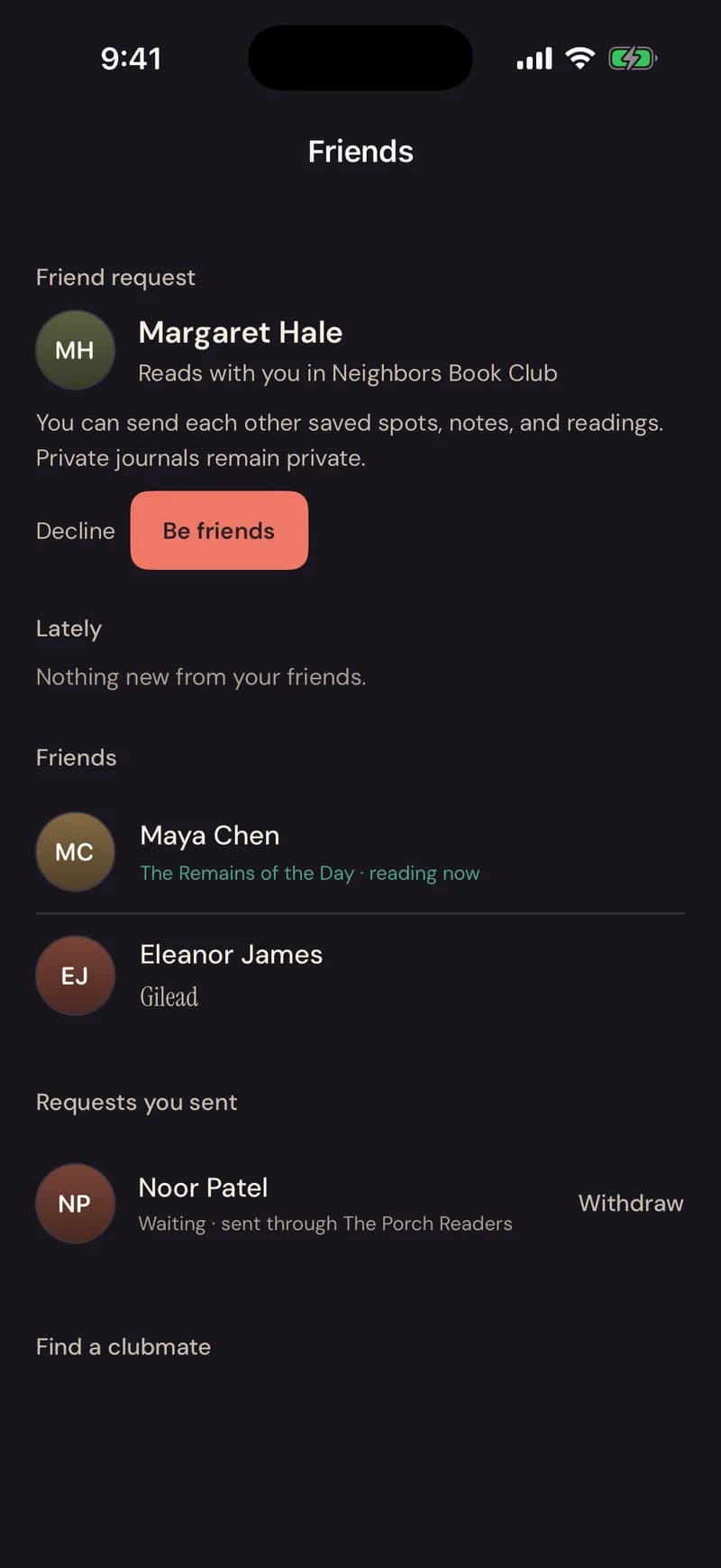
You connect by handing someone a key: an invite link that works once, or a code they scan, or — for someone you already read with in a club — one tap that asks them inside the app. There’s no search, no directory, no suggested people, and nothing to count.
A friend is someone you can hand a saved spot, a note, or a whole reading to, one person at a time. Friendship never opens your journal. You choose exactly what you send.
Remove a friend, block someone, hide their writing on your device, or report them to a person at Nook — from the same menu, any time.